What to do about the waning role of multilateral institutions
By Deborah Cohen, director of the Robert Buffett Institute for Global Affairs

We’re on a tightwire crossing from the past to the future, and our footing is uneasy at best.
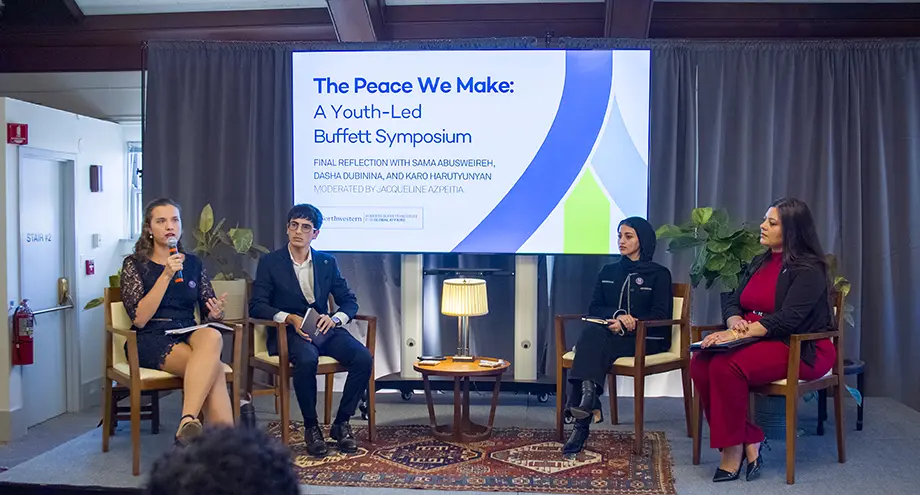
The state of the world 25 years from now depends on how we confront existential problems such as forever wars, climate change and unfettered artificial intelligence. But in this new might-makes-right world, the very imperfect institutions we’ve relied on as safety nets to manage great-power rivalry and international cooperation have frayed and, in some parts, disintegrated entirely.
Universities look to the future by drawing on the past, disbursing accumulated wisdom to underwrite the kinetic energy of the young. More than ever, we need our students' wild, heterodox ideas about crossing to the future. And we want them to understand the impediments, too, that may stand in the way of their plans.
Starting this year at the Roberta Buffett Institute for Global Affairs, our students will learn from leaders who have seen up close the trade-offs that diplomacy, humanitarian relief, international business and national defense demand. Thanks to a new gift from Roberta Buffett Elliott, the Institute will be hosting cohorts of distinguished practitioners-in-residence, some of whom will teach our new series of Global Lab courses. In these courses, students will delve into projects with real-world implications, working through simulated crises and complex logistical operations, developing advocacy campaigns, and traveling to get a behind-the-scenes view at international forums such as the United Nations’ COP climate conference.
Twenty-five years from now, we want our students and faculty to look back on their time at the Institute as rich in genuine experimentation. Our theme for this year, The World Without Institutions, aims to prompt a radical reimagination of international governance and cooperation between people. We will explore the emerging geopolitical frontier in outer space while tackling urgent questions about the global economic forces driving worsening wars and climate change. We hope students will emerge hardheaded as well as hopeful, equipped with fresh ideas about how to create brave, fair futures.