Then and Now
See our growth and evolution

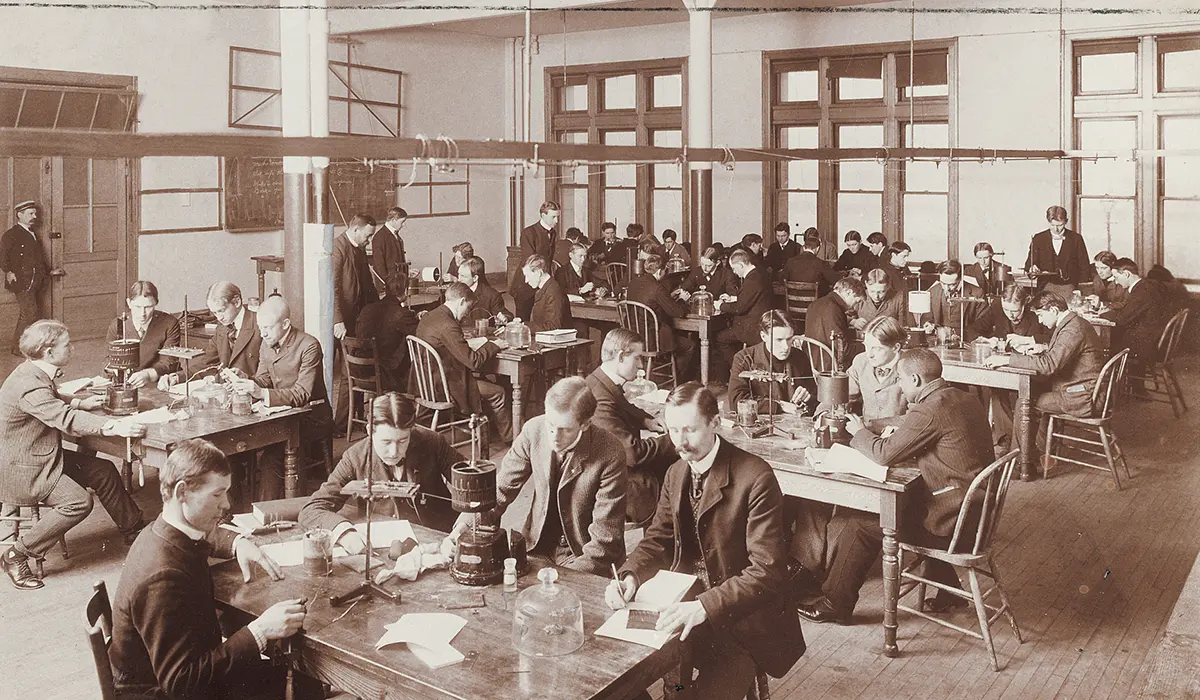
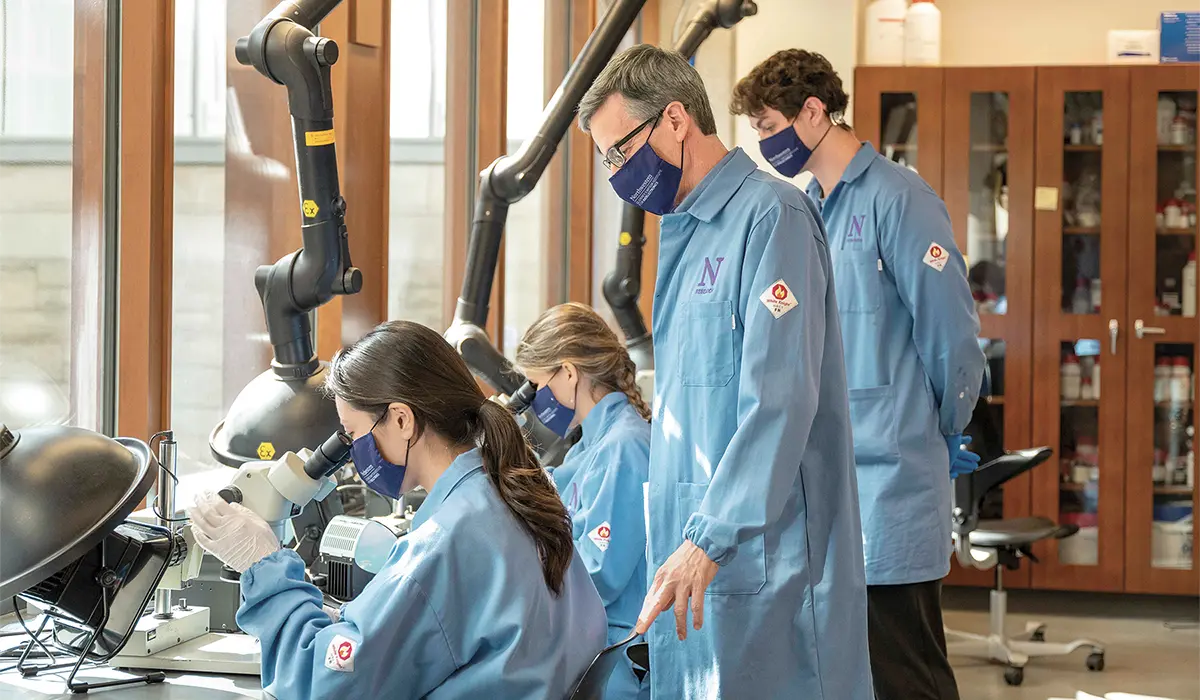
Forty-one years after Northwestern’s medical school was founded, hands-on laboratory science was becoming an increasingly important part of medical education. In physiology lab classes like these, students used laboratory instruments and techniques to study the workings of the human body.
In 1899, the school introduced practical, systematic courses in clinical laboratory methods—a first in U.S. medical education—with new coursework in physiology, pathology, chemistry and bacteriology. Students also received one to two hours of individual instruction daily in bedside and dispensary clinics. At the time, medical education for women was provided through the separate Northwestern University Woman’s Medical School, which closed in 1902.
Today, Northwestern’s laboratories are pushing the boundaries between engineering, biology and medicine. In the laboratory of John Rogers, director of Northwestern’s Querrey Simpson Institute for Bioelectronics, researchers develop electronics that can conform to the human body. His team has created devices that can monitor the brain and heart, measure the chemistry of sweat and even dissolve harmlessly inside the body after doing their jobs.
His laboratory also reflects the nature of modern research, where postdoctoral researchers, graduate students and undergraduates work across disciplines and pursue their own projects. Today, giving students the freedom to develop their own ideas and connecting them with experts in multiple fields is an important part of their education.
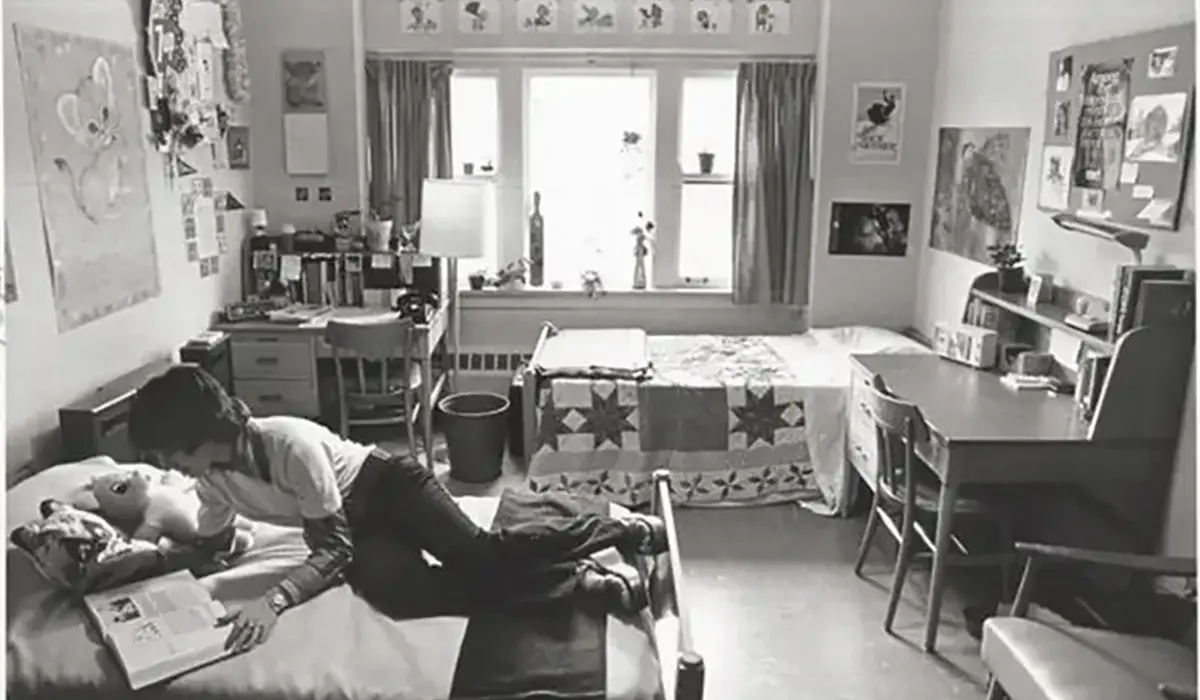
The first students to step into Allison Hall in 1960 would have encountered Northwestern’s newest and largest dormitory. They would find simple double rooms, shared bathrooms and central commons for lounging and dining. The dorm had room for 362 women (co-ed housing was still a decade away), who were expected to follow strict residence rules.
Female students like those in Allison Hall were expected to follow the “Read and Be Right” handbook published by the Northwestern Women’s Self-Government Association. Women signed in and out of the dormitory and followed strict dress codes and evening curfews. Those who missed curfew (10 p.m. on weeknights) were locked out; it was not until 1968 that women were issued physical keys to their residence halls.
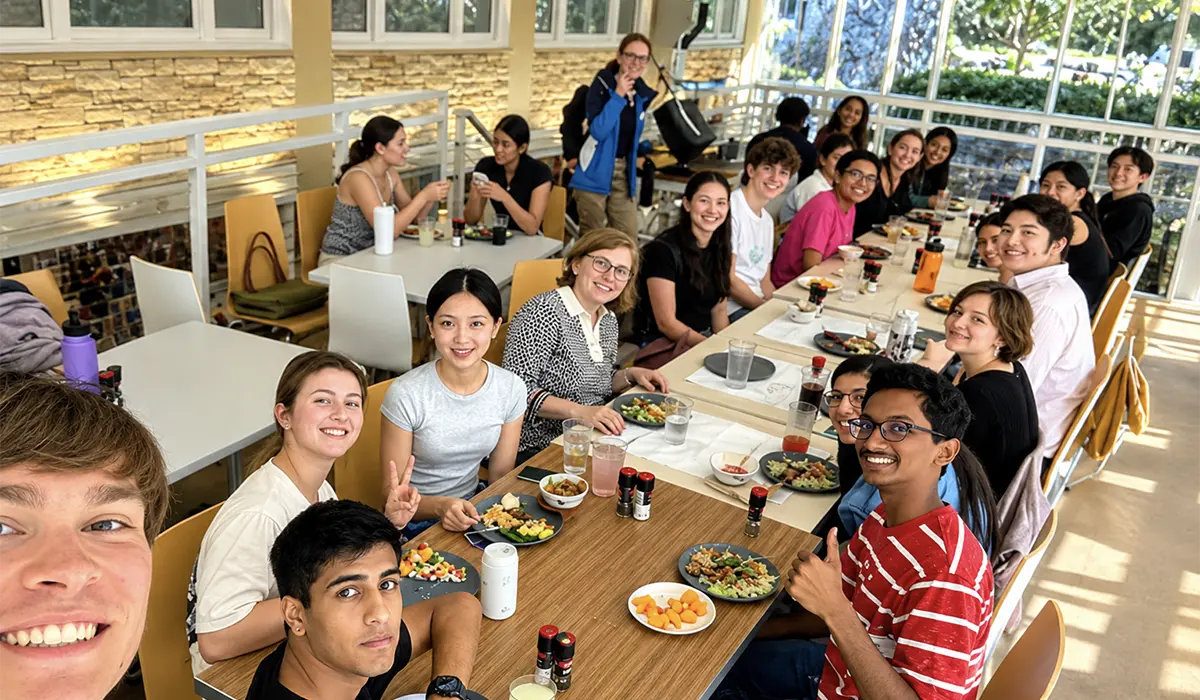
Today, Northwestern’s residence halls offer more than a place to sleep, with spaces and programs designed to help students build community. Residence halls range from as few as 25 students to more than 500. Students choose to live in singles, doubles or triples depending on the building, and current housing includes community- and suite-style bathrooms, full kitchens, lounges, study spaces, laundry facilities, dining commons and recreation spaces. In a residential college, students can live among others with shared interests and take opportunities to shape their own communities.
Chapin Hall, home to Northwestern’s Humanities Residential College, houses about 65 students from an eclectic mix of majors. Faculty members and elected student leaders help organize academic and social events, from faculty talks and discussions to cooking events, movie nights and book clubs. Students still share rooms and common spaces, but they have far greater independence in how they spend their time—and a greater role in creating the community around them.
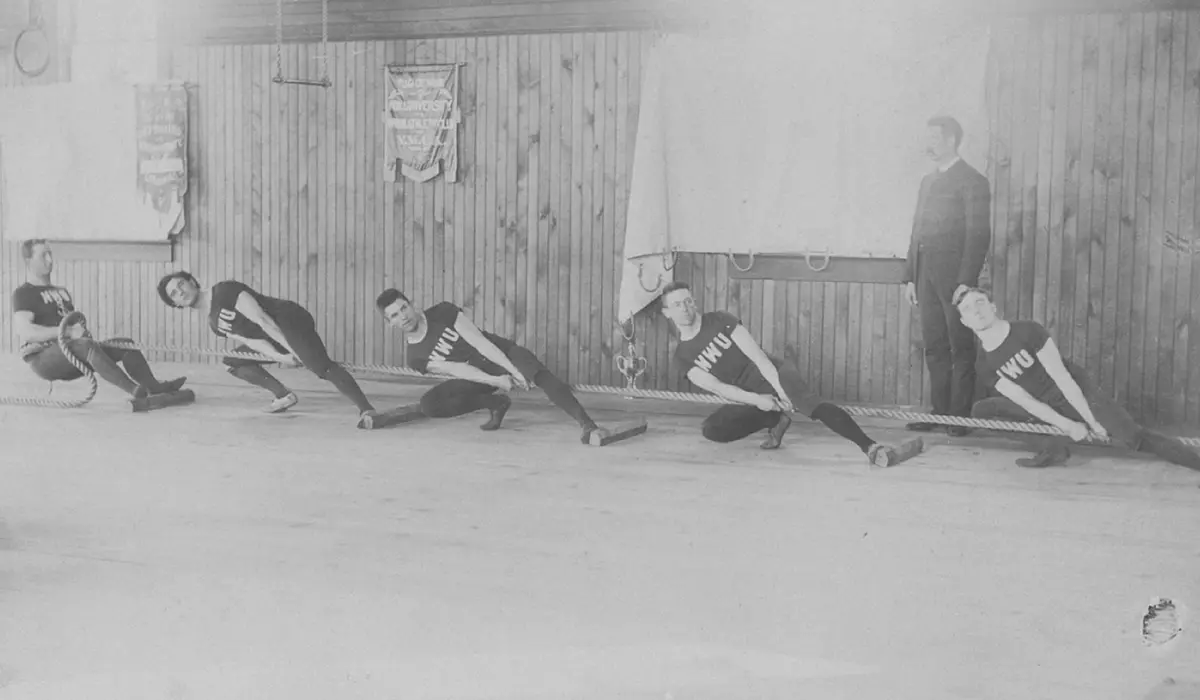
Baseball was the first intercollegiate sport on campus, and the the first team to represent Northwestern was formed in 1869. In 1875, the University diamond was etched out in the rough near what is now Deering Meadow. The following year, a league called the College Baseball Association of the Northwest was formed, including Northwestern, Racine College and the University of Chicago.
Other sports also took hold. Tug-of-war became a varsity sport in 1887. Northwestern won a major competition in 1889, eliciting praise from the school paper: “Our Tug-of-War team is the only athletic element we have that does credit to the institution.”
Football also made its appearance in the 1880s. The Purple’s first intercollegiate game was against Lake Forest University in 1882. The team’s success was spotty until 1896, the first formal year of the new Western Conference, which eventually became the Big Ten.
While University athletics were largely male, female students at the Women’s College also engaged in gymnastics and other types of physical activity. Unlike male athletes, though, theirs were not open to spectators.
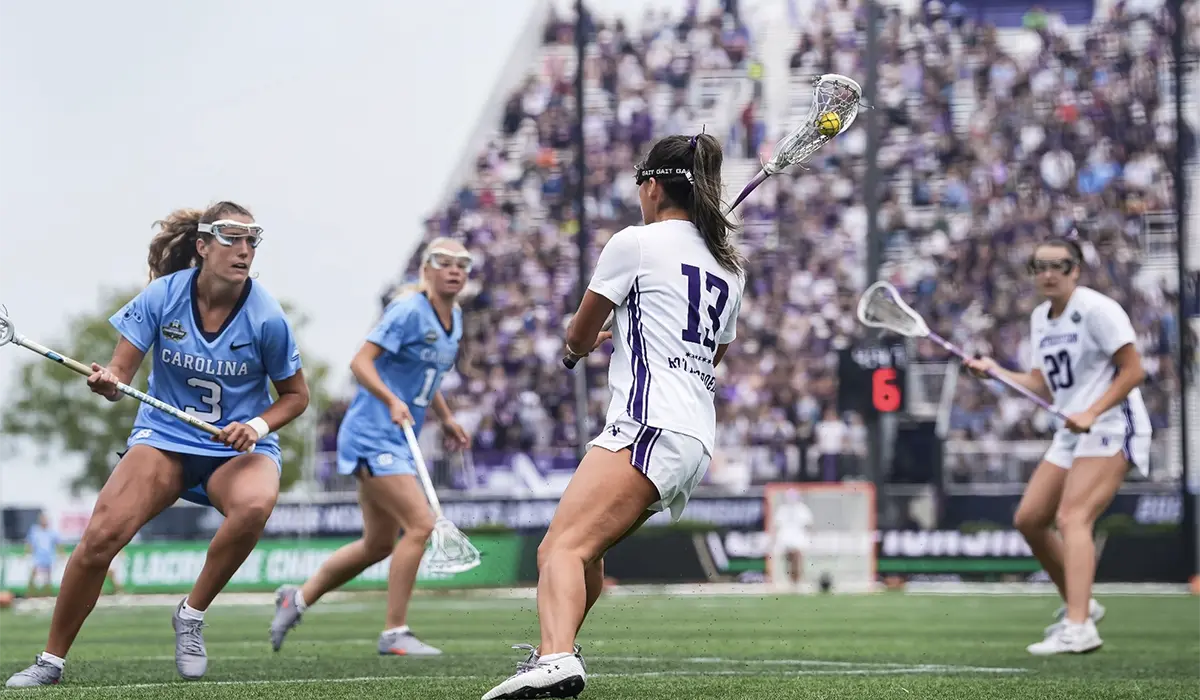
Today, Northwestern athletics encompasses 21 varsity sports and more than 500 student-athletes competing at the highest level of intercollegiate competition. The modern student-athlete is supported by performance infrastructure that includes sports medicine, strength and conditioning, nutrition, academic resources and sports psychology. Northwestern’s athletic facilities have evolved from a rough baseball diamond to a network of dedicated practice and performance spaces, including the 96,135-square-foot Ryan Fieldhouse.
The clearest symbol of that evolution may be Northwestern’s women’s lacrosse program, which captured its ninth NCAA championship in May 2026 before a record crowd of 8,316 at Northwestern Medicine Field at Martin Stadium. The title capped a 19–3 season and the program’s third consecutive Big Ten regular-season and tournament titles. The victory also represents a transformation in who gets to compete: in the 1880s, Northwestern’s organized athletics were largely male, while women’s physical activities were not open to spectators. Today, Northwestern’s women athletes compete on the national stage—and the university’s most recent NCAA championship belongs to them.
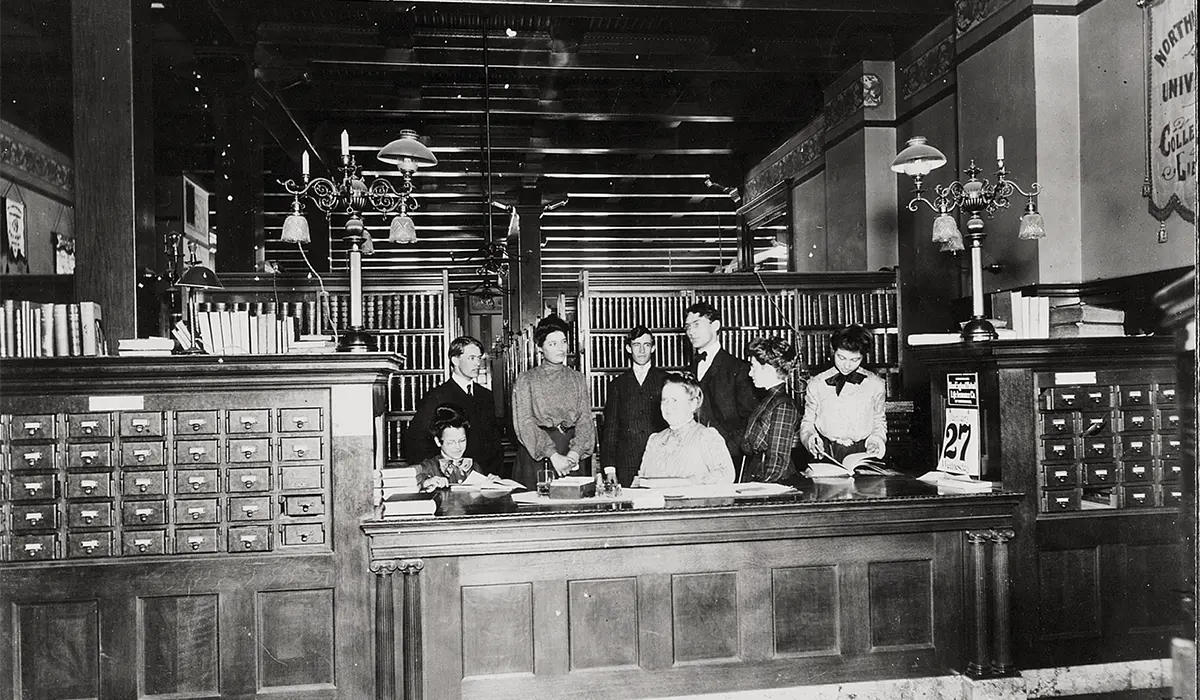
Described by The North Shore News as "one of the finest, if not the finest college library in the West,” Lunt Library was thoroughly modern for its time. Under the leadership of Lodilla Ambrose (class of 1887), Northwestern library grew from a single room in University Hall to the Orrington Lunt Library in 1894.
The new building had gas and electric illumination and room for 90,000 volumes. A reading room with room for 120 patrons was flooded with natural light. A card catalog, book lift and speaking tubes made this building cutting edge.
A leader in modern library management, Ambrose encouraged the library to seek gifts of books. By 1919, Lunt Library's walls and floors sagged under the weight of books; it was replaced in 1933 by Deering Library.
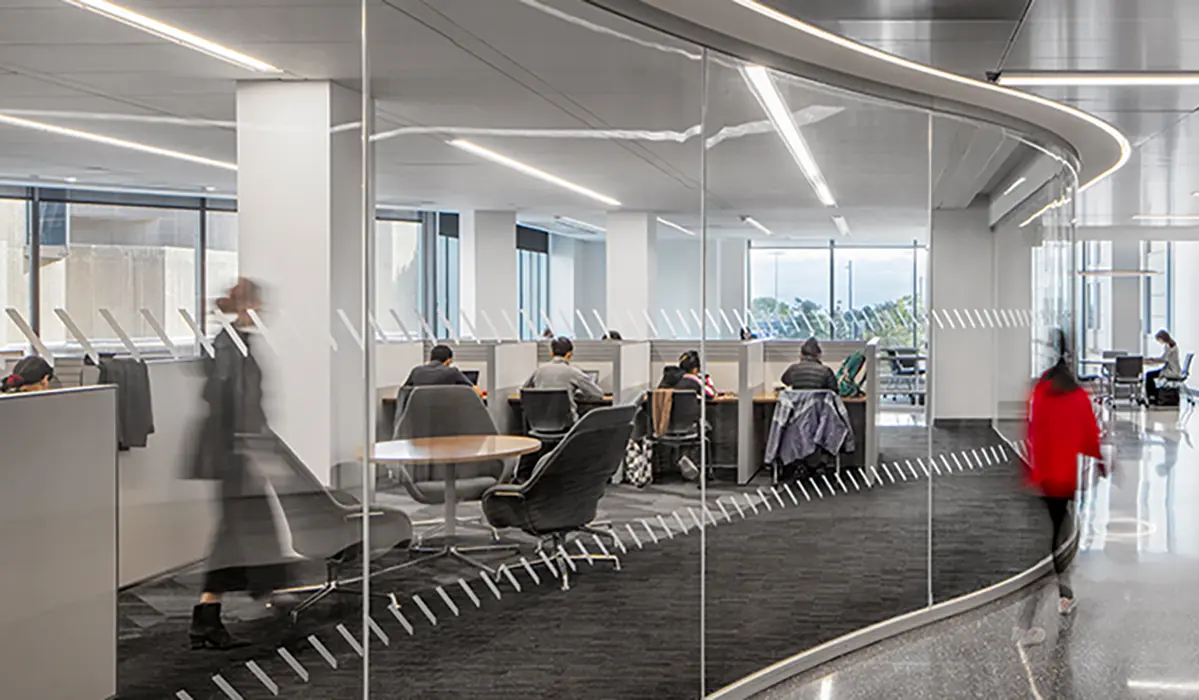
Today, Northwestern’s libraries form a network of specialized libraries and research collections, covering fields ranging from engineering and mathematics to law, medicine, music, African studies and transportation. The system includes University Library, Deering Library, Mudd Library and more.
A student visiting today’s Mudd Library would be able to work with, create and share information in ways that would have astonished Lodilla Ambrose. Mudd combines traditional study and research spaces with a GIS and Data Visualization Lab, MakerLab, Video Production Studio and specialized computing. Students can work with geospatial data, create videos, use 3D printers and scanners, and collaborate in technology-equipped spaces.